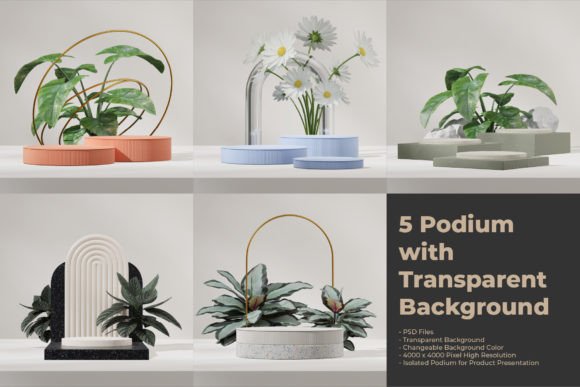
Evaluating 3D Podium with Transparent Background for Product Presentations
What a 3D Podium with Transparent Background Offers
A 3D podium with transparent background is a pre-rendered or editable digital asset that places a three-dimensional display pedestal or platform on a fully transparent canvas. The transparent background allows the podium to be composited directly into any scene, marketing material, or interface without the need for manual masking or background removal. When working with a 3D render podium with transparent background, the asset typically comes as a high-resolution image file, often in PSD format, with the podium isolated on its own layer above transparency. This format gives designers, marketers, and content creators a ready-made three-dimensional stage for products, awards, or branding elements, without requiring full 3D modeling or rendering expertise.
Why Designers and Marketers Seek These Assets
Understanding the underlying motivations for choosing a 3D podium with transparent background helps clarify whether it aligns with your workflow. Several practical drivers lead people to evaluate these files.
- Time efficiency. Building a 3D scene from scratch takes hours or days. A pre-rendered podium with transparency eliminates modeling, texturing, lighting, and rendering steps, allowing immediate placement into layouts.
- Consistent quality. Professional 3D render podium with transparent background files are produced with controlled lighting, realistic materials, and high polygon counts. This level of polish is difficult to achieve quickly in-house, especially for teams without dedicated 3D artists.
- Flexibility in compositing. The transparent background means the podium can be layered over any background color, gradient, photograph, or brand asset. This is particularly valuable when producing multiple product shots for different campaigns or seasonal themes.
- High-resolution output. Files offered at 4000 x 4000 pixels at 300 dpi/ppi provide enough resolution for print applications such as brochures, posters, and trade show displays, while also being suitable for digital use where cropping or scaling is required.
- Organized source files. PSD files with well-organized layers allow users to isolate components, adjust shadows, or modify reflections without degrading the original render. This layer structure is a key advantage over flattened image formats.
Benefits Worth Weighing
When evaluating a 3D podium with transparent background, several concrete benefits deserve attention.
Compositing Freedom
The transparent background is the defining feature. It allows you to place the podium on any color or background texture without edge artifacts. For brands that change campaign colors seasonally or need to adapt assets for different regions, this eliminates the need to re-render or re-photograph. The isolated podium image can be dropped into presentations, e-commerce templates, or video overlays with minimal effort.
Resolution and Print Readiness
Images at 4000 x 4000 pixels with 300 dpi provide sufficient detail for large-format print. A podium rendered at this resolution retains sharp edges, fine material texture, and realistic reflections even when printed at significant sizes. For teams that produce both digital and print materials, having a single asset that serves both purposes reduces the number of files to manage.
Layer Organization
Well-organized layers in the PSD file allow you to turn on or off specific elements such as shadows, reflections, or the podium body itself. This granular control is practical when you need to match lighting conditions between the podium and the product being displayed. It also simplifies adjustments if the client requests a different material finish or color variant.
Tradeoffs and Practical Considerations
No asset type is universally best. A 3D render podium with transparent background comes with tradeoffs that should factor into your decision.
- Fixed perspective. The podium is rendered from a specific camera angle. If your layout requires a different viewpoint, the pre-rendered asset will not match. Rotating or skewing a 2D image of a 3D render distorts perspective and breaks the illusion. Alternative angles require additional render files or a full 3D scene file.
- Lighting is baked in. The lighting, shadows, and reflections are part of the rendered image. If you need to composite the podium into a scene with different lighting direction or color temperature, the baked lighting may clash. Some PSD files include shadow layers that can be adjusted in opacity or blurred, but this is not the same as re-lighting a 3D scene.
- Material limitations. While the podium may look realistic, you cannot change its material properties in a 2D file. If your brand requires a brushed metal finish instead of a glossy white one, you would need a separate render or a 3D source file with material overrides enabled.
- File size. A 4000 x 4000 pixel PSD with multiple layers can be large, often exceeding 100 MB. This may slow down workflow on less powerful computers and requires adequate storage and RAM for smooth editing.
Scenarios Where a 3D Podium with Transparent Background Excels
Certain use cases make this type of asset a particularly strong fit. Evaluating your own project against these scenarios can guide your decision.
High-Volume Product Launches
When you need to showcase dozens of products on the same podium style, a single 3D render podium with transparent background allows you to composite each product image behind or on top of the podium quickly. Consistency across the entire product line is maintained, and production time per SKU drops dramatically compared to photographing each product on a physical pedestal.
Brand Campaigns with Multiple Background Variations
If your campaign uses different background colors for different channels, regions, or seasons, the transparent background lets you swap backgrounds in seconds. You can produce a set of images for social media, email marketing, and print ads from the same podium file, just by changing the background layer in the PSD.
E-Commerce and Catalog Production
Online stores and printed catalogs benefit from clean, isolated product presentations. A podium with a transparent background integrates easily into template-driven layouts. The high resolution ensures that zoom-in views on product pages remain sharp, which is important for customer confidence and conversion rates.
Presentations and Pitch Decks
For internal presentations or client pitches, a 3D podium adds a polished, professional look without requiring design team resources. The isolated podium can be placed on any slide background, and the organized layers allow quick color adjustments to match presentation themes.
When Alternatives Deserve Consideration
There are clear situations where pre-rendered podium assets may not be the optimal choice. Recognizing these early can save time and frustration.
Need for Full 3D Control
If your project requires multiple camera angles, animated rotation, or product shots from different perspectives, a single 2D render will not suffice. In these cases, purchasing or building a full 3D model of a podium gives you complete control over camera, lighting, and materials. Many 3D marketplaces offer podium models in formats compatible with Blender, Cinema 4D, or 3ds Max. While the upfront investment in learning the software or hiring a 3D artist is higher, the flexibility is greater for complex or interactive presentations.
Photorealistic Context Shots
If your product needs to appear in a realistic environment with specific lighting and reflections, a studio-style podium may look too generic or staged. A custom 3D scene or a physical photo shoot with a real podium may better match the environmental context. The transparent background is designed for compositing, but if the composite requires matching complex environmental lighting, the baked lighting in the render may become a limitation.
Frequent Material or Color Changes
If your brand frequently updates its visual identity or runs promotions requiring different podium colors, textures, or finishes, the fixed material of a pre-rendered asset can become restrictive. While PSD layer organization may allow some color overlay adjustments, the specular highlights and reflections are tied to the original material. A 3D scene file with material parameters would be more efficient for ongoing changes.
Budget Constraints for Large Sets of Variations
Individual 3D podium with transparent background files are typically sold per variation. If you need five different podium shapes in three colors each, purchasing fifteen separate files can add up. In contrast, a single 3D model that can be re-textured and re-rendered may offer lower per-variation cost if you have the rendering capacity in-house.
Practical Decision-Making Insights
To determine whether a 3D render podium with transparent background aligns with your goals, consider the following evaluation framework.
- Assess your output volume. If you are producing a moderate number of product shots (tens to low hundreds) and need consistency, pre-rendered assets are often the most time-efficient path. For very high volumes with many variations, a 3D scene file with automated rendering may be more economical.
- Evaluate your compositing environment. If your final output will be placed on simple gradients, solid colors, or subtle texture backgrounds, the baked lighting of a 3D podium with transparent background will integrate smoothly. If your backgrounds contain strong directional lighting or environmental reflections, test a sample composite before committing.
- Check the layer structure. Not all PSD files are created equal. Before purchasing, confirm that the file includes separate layers for the podium body, shadow, reflection, and any background elements. Well-organized layers give you the flexibility to make adjustments that preserve the realism of the original render.
- Consider future reuse. A neutral podium design with subtle materials will remain usable across multiple campaigns and seasons. Trendy or elaborate podium styles may date quickly. If you plan to use the asset for a year or more, opt for a versatile design that will not clash with evolving brand aesthetics.
- Match resolution to your output medium. 4000 x 4000 pixels at 300 dpi is appropriate for print applications up to roughly 13 x 13 inches at full resolution. For large trade show graphics, you may need even higher resolution or an asset designed for scaling. For digital-only use, you can downsample to reduce file size and improve performance.
Ultimately, a 3D podium with transparent background serves as a practical bridge between the flexibility of 3D rendering and the speed of 2D compositing. It is not a replacement for full 3D production, nor is it intended to be. It is a production tool suited for teams that need professional, consistent podium visuals without the overhead of building 3D scenes from scratch. By weighing the tradeoffs in perspective, lighting, and material flexibility against your specific project requirements, you can decide whether this type of asset supports your workflow or whether a more customizable alternative is worth the additional investment.