Tarot Card the Cat Lover Skeleton Png – A Digital Design Built for Print-on-Demand Success
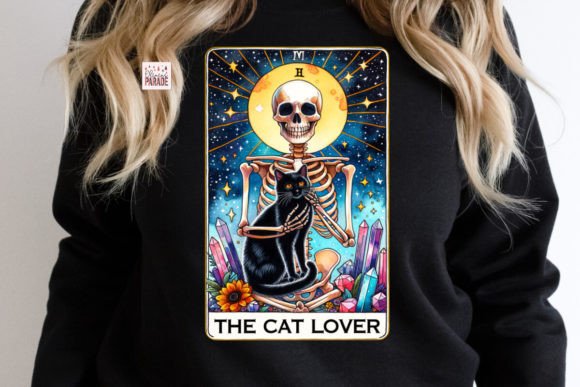
If you have spent any time browsing digital design marketplaces, you have likely come across the Tarot Card the Cat Lover Skeleton Png. At first glance, it is easy to see why this particular design draws attention. A skeleton cuddling a black cat, framed with the words “the cat lover” in a style that nods to traditional tarot imagery — it is evocative, slightly dark, playful, and deeply relatable for anyone who has ever felt a bond with a feline companion. But what exactly is this file, and more importantly, how can you use it without running into avoidable headaches?
The Tarot Card the Cat Lover Skeleton Png is a high-resolution digital image. It is not a font, not a vector file, and certainly not a physical item you will receive in the mail. It is a PNG file delivered inside a zip folder the moment your purchase completes — an instant digital download. That convenience is enormous. No waiting, no shipping costs, no inventory to store. But that same convenience also opens up a set of pitfalls that can trip up even experienced creators. This article walks through the most common mistakes people make with designs like this, explains why those missteps matter, and offers straightforward fixes so you can get the most out of your download.
Mistake One – Treating the PNG as a Resale Asset
One of the most common misunderstandings involves ownership and usage rights. The Tarot Card the Cat Lover Skeleton Png comes with clear restrictions: you cannot resell the digital file itself. You cannot bundle it with other designs and sell the bundle as a digital download. You cannot upload the raw PNG to a marketplace and call it a day. The license is for physical product creation and print-on-demand only.
Why does this matter? Because failing to respect these terms can get your seller account suspended, your listings removed, and your reputation damaged. The creator of the design retains the copyright. You are buying a license to use the image on physical items — T-shirts, mugs, wall art, sweatshirts, tote bags, pillows, phone cases, and similar goods. That is a generous and practical license. It just does not extend to digital resale.
Better approach: Read the license agreement before you download. If the terms feel unclear, contact the seller. And if you are looking for files you can resell as digital products, look specifically for commercial-use PNGs that grant resale rights. The Tarot Card the Cat Lover Skeleton Png is designed for the print-on-demand and physical product world, not for digital-only storefronts.
Mistake Two – Confusing PNG with Font or Vector Formats
A surprising number of new buyers assume that because the design includes text, they can edit the words. The name “the cat lover” is part of the image. It is flattened into the PNG. You cannot change it to read “the dog lover” or “the cat queen” without raster editing software like Photoshop, GIMP, or Procreate — and even then, altering the text cleanly can be difficult because the lettering is likely merged with the background artwork.
If you need a customizable version where you can swap out text, you want a layered file such as a PSD, SVG, or AI file. The PNG format is a finished image, not a working file. Trying to edit it as if it were a font or vector will lead to frustration, jagged edges, and lost image quality.
Better approach: Decide upfront whether you need a ready-to-print design or an editable template. If you love the skeleton-and-cat look but want different wording, search for layered versions or contact the artist to ask about custom options. For most print-on-demand users, the static PNG is ideal because it eliminates the risk of accidental text changes and keeps the design consistent.
Mistake Three – Overlooking Resolution and Size Requirements
The Tarot Card the Cat Lover Skeleton Png is delivered as a high-resolution PNG, but “high resolution” can mean different things depending on the product. A design that looks crisp on a mug may appear soft or pixelated on a large hoodie. This happens when the PNG dimensions are not scaled appropriately for the print area.
Common errors include stretching the image beyond its native resolution, which introduces visible pixelation, or shrinking it too much, which can make details like the skeleton’s bones or the cat’s whiskers muddy. Print-on-demand platforms typically recommend a minimum of 300 DPI for clear results. If your PNG is 3000 x 3000 pixels at 300 DPI, you have plenty of room for most medium-sized items. But if you try to print that same file on a poster or a large blanket, you may need to check whether the artwork holds up.
Better approach: Always check the pixel dimensions of the downloaded PNG before uploading it to a print provider. Use a simple image inspector (most operating systems let you view image properties) to confirm the size. If you plan to print on large items, look for designs that offer scaled versions or contact the creator to ask about maximum print size. A small test print on a single item can save you from ordering a batch of flawed products.
Mistake Four – Ignoring Background Transparency
PNG files support transparent backgrounds, which is a major advantage for print-on-demand. It means the Tarot Card the Cat Lover Skeleton Png can be placed onto colored garments without an ugly white box around it. However, not all PNGs with transparent backgrounds are created equal. Some have rough edges, leftover halo pixels, or semi-transparent areas that print as faint shadows on certain materials.
This becomes especially noticeable on dark-colored clothing. If the skeleton design includes subtle gray or white fringing around the edges, it can appear as a ghosted outline on a black T-shirt. That look is rarely intentional and can make your final product look cheap.
Better approach: Open the PNG in your design software and zoom in on the edges. Look for stray pixels, jagged lines, or color bleeding. If you find issues, you can often clean them up using a selection tool and a layer mask. For sublimation printing, where the image fuses with the fabric, clean edges are even more critical because there is no ink layer to hide imperfections. A few minutes of inspection before production can prevent returns and unhappy customers.
Mistake Five – Using the Wrong Print Method for the Design
The Tarot Card the Cat Lover Skeleton Png works with both sublimation printing and direct-to-garment (DTG) methods, but these two techniques are not interchangeable for every product. Sublimation requires polyester or polymer-coated surfaces. DTG works on cotton and cotton blends. If you place a sublimation design on a 100% cotton T-shirt, the image will wash out quickly and look faded. Conversely, a DTG print on a polyester item may crack or peel because the ink does not bond well with synthetic fibers.
This is where the art file itself also matters. Because the skeleton design contains fine lines and dark moody tones, DTG may handle it better on light-colored garments, while sublimation can deliver vivid results on white or light polyester items. Trying to force one method for all products leads to inconsistency.
Better approach: Match the print method to the product material. If you want to offer this design on cotton T-shirts, use DTG. If you are making mugs, coasters, or polyester tumblers, go with sublimation. Do not assume the PNG file will automatically look great on every substrate. Test a sample before listing the product for sale, and always note the material and care instructions in your product description so customers know what to expect.
Mistake Six – Skipping the Mockup Stage
A beautiful PNG file does not automatically translate into a beautiful product. Many creators upload the Tarot Card the Cat Lover Skeleton Png to their print-on-demand provider, set the placement, and publish the listing without seeing a mockup. That is a gamble. The skeleton’s arm might wrap awkwardly around a mug handle. The text could be too close to the neckline of a sweatshirt. The cat’s ears might get cut off by the print boundaries.
Mockups exist exactly to catch these spatial problems. A mockup lets you see how the design sits on the product before you commit to inventory or listings. It takes only a few minutes but saves you from the disappointment of receiving a sample that looks nothing like you imagined.
Better approach: Use a mockup generator that matches your print provider’s product dimensions. Place the PNG onto the mockup, rotate or resize it if needed, and check alignment. If the design includes delicate details near the edges, consider shrinking it slightly to ensure everything stays within the printable area. This step also helps you visualize color contrast — for example, whether the black cat is visible against a dark background or needs a lighter garment to pop.
Mistake Seven – Forgetting That Digital Means No Physical Backup
Because the Tarot Card the Cat Lover Skeleton Png is an instant digital download, there is no physical disc, flash drive, or printed proof arriving in your mailbox. The only copy you have is the one you downloaded. Hard drives fail. Email links expire. Cloud storage accounts get cleaned out. If you misplace the file and the original seller does not offer re-downloads, you lose access.
This is not a hypothetical risk. Digital products are ephemeral by nature. Relying on a single download location is a recipe for regret, especially if you have already used the design on multiple product listings and need to re-upload it later for edits or reorders.
Better approach: Immediately upon download, save the PNG file in at least two separate locations. A local folder on your computer, a cloud drive like Google Drive or Dropbox, and an external hard drive provide a simple three-way safety net. Name the file clearly — including the date of purchase and a note about the license type — so you can find it months or years later. A few minutes of file management now can prevent hours of searching later.
What to Check Before You Buy or Use
Before you purchase the Tarot Card the Cat Lover Skeleton Png, confirm that the license fits your business model. If you make physical goods, sell them on platforms like Etsy, Redbubble, or your own Shopify store, the standard license likely covers your needs. If you plan to use the design on tens of thousands of products or incorporate it into a company logo, you may need an extended license. The seller’s product description will usually state these limits plainly.
Also verify the file dimensions and DPI. A PNG that measures 4500 x 5400 pixels at 300 DPI gives you excellent flexibility. Smaller dimensions may limit you to smaller products. Read reviews from other buyers to see if anyone mentions issues with print quality or file integrity. Reliable sellers will have consistent positive feedback regarding file clarity and ease of use.
Finally, consider the aesthetic fit. The skeleton-with-cat motif appeals to a specific audience — gothic, witchy, tarot-enthusiast, cat-loving customers. If your target market leans toward minimalist or corporate themes, this design may not resonate. Know your audience before you invest time in production. The best PNG file in the world underperforms if it is marketed to the wrong crowd.
The Tarot Card the Cat Lover Skeleton Png is a versatile, high-quality design that can elevate your print-on-demand catalog or personal craft projects. By avoiding these common mistakes — respecting the license, understanding the format, inspecting the file, choosing the right print method, using mockups, and backing up your download — you skip the frustration and move straight to creating products people actually want. Whether you are a seasoned seller or just starting your creative side hustle, a little upfront attention turns a simple PNG into a reliable, profitable asset.