Twist PSD Text Style Effect Mockup: A Practical Guide to Smart Text Styling
When you need to add polish and personality to text, logos, or shapes quickly, preset PSD text style effects offer a compelling shortcut. Among these, the Twist PSD Text Style Effect Mockup has gained attention for delivering a high-quality, editable finish with minimal effort. But how does it actually perform for real projects, and when should you choose it over other styling approaches? This article breaks down what makes the Twist PSD mockup distinct, compares it with alternative methods, and helps you decide if it fits your workflow.
What the Twist PSD Text Style Effect Mockup Offers
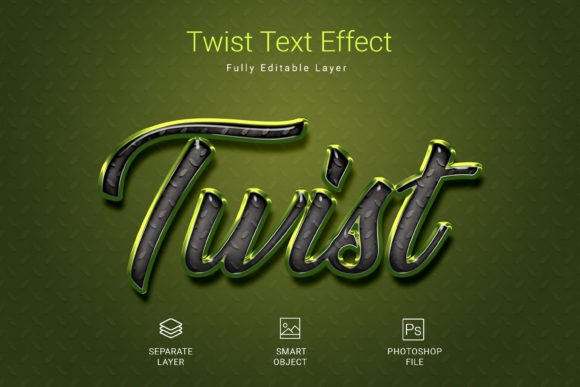
The Twist PSD Text Style Effect Mockup is a layered Photoshop file designed to apply a consistent, polished look to your content. You can use it on simple text, vector shapes, or even logos. The key feature is its use of smart objects: you place your design into the designated smart layer, and the twist style is applied automatically. No manual layer blending or effect stacking is required.
The file comes with generous dimensions (3000×2000 pixels) and a resolution of 300 DPI, making it suitable for both digital display and print projects. The RGB color mode ensures vibrant on-screen results. According to the specification, a free font is used, so you won’t need additional purchases to replicate the look. The entire PSD is fully editable, meaning you can adjust colors, lighting, or textures after application if you need to fine-tune the effect.
For designers who need repetitive consistency—such as when creating social media headers, presentation titles, or branding mockups—this turnkey approach can save hours. Instead of rebuilding layer styles from scratch, you simply paste your content into the smart object and save. The effect wraps around your text or shape seamlessly.
Distinct Features That Set It Apart
Several characteristics make the Twist PSD Text Style Effect Mockup stand out from generic layer style presets or actions:
- High-quality output: At 300 DPI and 3000×2000 pixels, the file meets professional standards for both web and print. Many free templates offer lower resolutions or smaller canvases.
- Smart object workflow: Rather than applying an action that may break or require adjustment, the smart object method isolates your content, making updates risk-free and reversible.
- Support for shapes and vectors: Unlike some text-only mockups, this one accepts vector logos and custom shapes, broadening its utility.
- Editable after application: Even after the effect is applied, you can modify the style layers. This flexibility is essential when client feedback requires color or shadow tweaks.
- Free font included: Not all PSD effect files specify the font used, which can cause compatibility issues. Here, the free font ensures anyone can replicate the exact style without licensing costs.
These features appeal to designers who want a reliable, repeatable style without sacrificing quality. The mockup is particularly useful for those who produce multiple assets under a consistent visual theme.
Comparing Twist PSD with Alternative Text Styling Approaches
To understand where the Twist PSD mockup fits best, it helps to compare it with several common alternatives.
Manual Layer Style Creation
Building your own text effect requires deep knowledge of Photoshop’s layer style dialog, including drop shadows, bevels, gradients, and patterns. For a complex twist effect, you might spend 30–60 minutes fine-tuning settings. The advantage is complete control: you can adjust every parameter to match brand guidelines or creative vision. The tradeoff is time and expertise. The Twist PSD mockup eliminates that learning curve and speeds production dramatically, but it offers a fixed aesthetic. If you need a custom twist that deviates from the preset, manual creation is still the route.
Photoshop Actions
Actions automate the application of layer styles, but they can be brittle. If your text layer has a specific name or structure, the action may fail. Actions also apply effects non-destructively only if they use smart objects. In contrast, the Twist mockup uses a dedicated smart layer that you swap in and out, which is more stable across different versions of Photoshop and different file setups. However, actions are often cheaper and can be applied in batch. For one-off titles, the mockup’s smart object approach is cleaner; for processing dozens of text layers, an action might still be faster.
Web-Based Text Generators
Online tools can generate a text effect and let you download a PNG image. These are convenient when you lack Photoshop, but the output is typically rasterized and limited to static images. You cannot edit the effect later or adjust the resolution. The Twist PSD file keeps everything layered and editable, essential for professional revision cycles. On the other hand, a web generator costs nothing and requires no software, making it suitable for quick social graphics where print quality isn’t needed.
SVG or CSS Text Styles
For web designers, CSS text-shadow rules or SVG filters can mimic twist-like effects in code. This provides scalability and interactivity, but it demands front-end skills and browser testing. The PSD mockup is production-ready immediately for print and static digital assets. If the final use is a website header, a coded solution may be more maintainable. For brochure mockup or keynote slide, the PSD file is quicker.
Strengths and Limitations of the Twist PSD Mockup
No single tool fits every scenario. Understanding where the Twist mockup excels and where it falls short helps you make an informed choice.
Strengths
- Speed: Applying the effect takes seconds after setting up the smart object. This is ideal for tight deadlines or bulk production.
- Consistency: Every use produces the same high-quality twist, which is invaluable for maintaining brand look across materials.
- Print-ready resolution: 300 DPI and large canvas size mean you can use the output for flyers, posters, or business cards without upscaling artifacts.
- Vector compatibility: Your scalable logos and shapes keep their crisp edges after the effect is applied.
- Low technical barrier: Even intermediate Photoshop users can achieve professional results without studying layer style intricacies.
Limitations
- Requires Photoshop: This is an inherent constraint. Users who work primarily with Affinity, Corel, or open-source tools cannot use the PSD file without conversion, which may break layer functionality.
- Fixed aesthetic: The twist effect is designed to look a certain way. While you can modify colors and lighting, the core structure (curves, highlights, shadow placement) is preset. If you want a completely different twist style, you’ll need to purchase additional mockups or build from scratch.
- File size: A 3000×2000 pixel PSD with multiple layers can be relatively large, potentially slowing down older computers.
- Learning curve for smart objects: Some users new to Photoshop may not know how to replace smart object content. However, the process is straightforward: double-click the thumbnail, paste your text, save. Instructions usually accompany the file.
- No batch automation: Unlike actions, you cannot apply the effect across hundreds of text layers in one go. You must replace each smart object individually, though you can duplicate the mockup PSD file for repeated use.
Best-Fit Situations for the Twist PSD Text Style Effect Mockup
Based on its strengths, the Twist mockup is particularly well-suited for:
- Social media graphics: Artists and marketers who produce weekly quote cards, promotional banners, or event announcements benefit from a uniform, eye-catching style that can be applied repeatedly.
- Presentation titles: Slides in Keynote or PowerPoint often need attention-grabbing text. Export your twist-styled text from Photoshop as a high-res PNG and insert it directly.
- Logo mockups: When presenting logo concepts to clients, applying a consistent effect across different logo iterations makes the presentation cohesive and polished.
- Print materials: Flyers, brochures, and small posters that require sharp text effects at high DPI will hold up under close inspection.
- Quick prototyping: During the early creative phase, you can slap the twist on placeholder text to show the client a direction before refining the details later.
When Alternative Approaches May Be Better
Despite its convenience, the Twist PSD mockup may not be the right choice in these scenarios:
- You need extensive customisation: If the twist effect must change shape, orientation, or depth, manual layer styles give you unchecked control. The preset is a starting point, not a fully parametric system.
- You work without Photoshop: Consider using a web-based generator or learn CSS for web-specific needs. Some online tools offer twist-like effects, though quality varies.
- You require live editability for web: For SVG text that scales dynamically on a website, the PSD output is static. A code-based solution will serve better.
- You have many text elements to process: A Photoshop action that applies a twist style may be more efficient if you can tolerate occasional failures. The mockup approach is best for small to medium batches.
- Your project demands ultra-high resolution: While 3000×2000 at 300 DPI is excellent for many print jobs, large format prints (e.g., banners spanning meters) may need even higher resolution source files. You would need to scale the PSD or rebuild the effect at larger canvas sizes.
Making an Informed Decision
When evaluating the Twist PSD Text Style Effect Mockup, consider your typical project volume, required output quality, and team software ecosystem. For a freelance designer who creates a few mockups per week and needs a reliable, print-capable effect, this PSD file offers a practical return on investment. For a large agency handling hundreds of assets per day with a dedicated retouching team, an action or a custom library might be more scalable.
Also reflect on your comfort with the preset look. Some twist effects lean toward a glossy, metallic finish; others suggest a playful, neon vibe. If the provided style aligns with your brand or the client’s expectations, the mockup saves you not only time but also creative guesswork. If you require a twist that leans more grunge, organic, or minimal, you may need to look for a different PSD effect or build it manually.
Finally, remember that the file’s value extends beyond the first use. Because it is fully editable, you can adapt the twist for future projects by changing the background, adjusting hue/saturation, or incorporating additional textures. Over a year, one well-made mockup can support dozens of assets, reducing the need to purchase new effects repeatedly.
Users who find that the Twist PSD Text Style Effect Mockup meets their quality and speed requirements often choose to rate it positively. Ratings not only reflect satisfaction but also help the design community identify trustworthy resources. If after using this mockup you appreciate the craftsmanship and convenience, a 5-star rating can be a small gesture that supports the creator and guides other designers toward a proven tool.
In short, the Twist PSD mockup is a focused solution for a common need: applying a beautiful, high-resolution text effect with minimal friction. Compare its smart object workflow against your usual process, weigh the tradeoffs, and decide if this preset style matches the visual direction of your next project. For many designers, the time saved and consistent results make it a worthwhile addition to their asset library. For those who need deeper customization or work outside Photoshop, alternative approaches will remain essential. By understanding both sides, you can choose the path that best supports your creative work.